| What is the
German Doll Company?
A brief
history...
During the heyday of the German
porcelain making industry in 1900, the area of the
Thuringian Wald (in what was formerly East Germany)
had as many as 200 factories producing dolls for the
American market. The Hertwig factory in
Katzhutte alone turned out 2.000 dozen dolls per day
during the winter months! Seconds were usually
disposed of by merely dumping them behind the factory
or using them as filler beneath factory floorboards -
an inexpensive substitute for insulation
materials. Along with the huge number of dolls
being turned out every day also came an equally large
number of plaster molds in which each porcelain doll
head, arms, legs, etc. had to be poured.
At the very most, one mold could
be used to pour 15 doll heads, as the features of each
piece become less crisp with each pouring.
Instead of disposing thousands of molds per week,
molds were often mortared into interior and exterior
walls of the porcelain factories, or given to the poor
factory workers who gladly used them to build chicken
houses, barns or homes - again an inexpensive
substitute for expensive building materials.
Only a few of the porcelain factories remain standing,
lost through war or fire. Most of those that did
survive have been torn down since the reunification of
Germany.
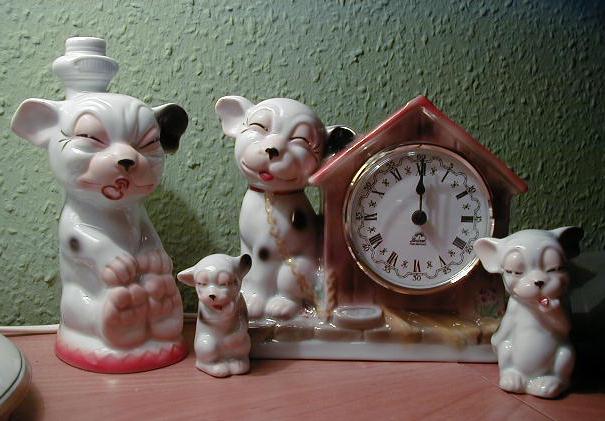
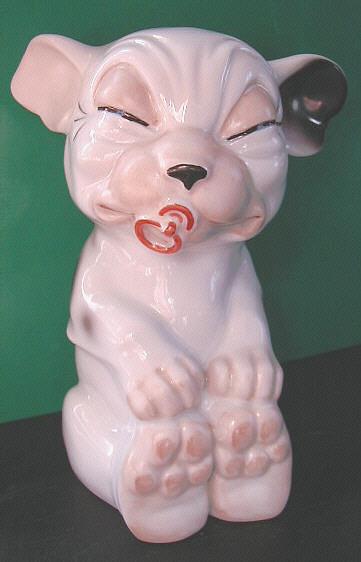
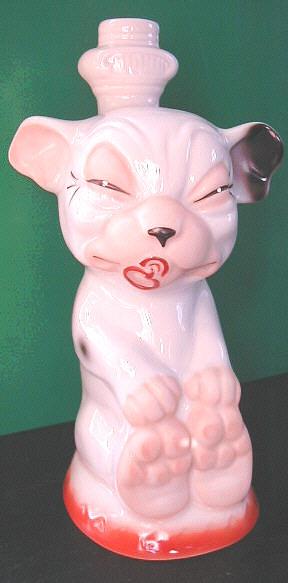
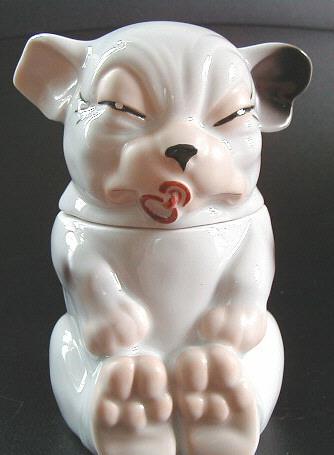
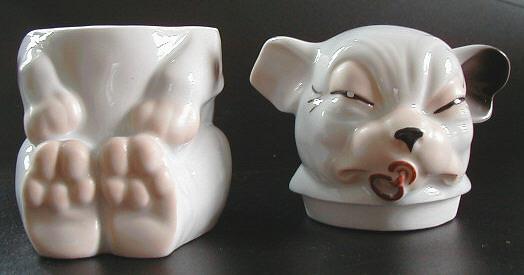
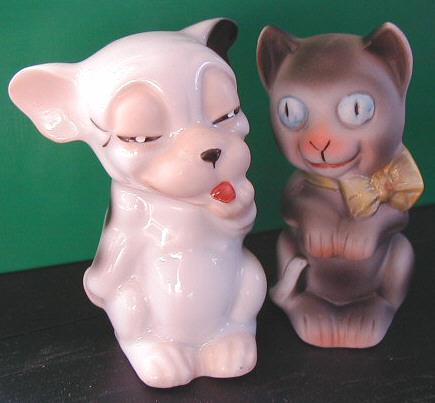
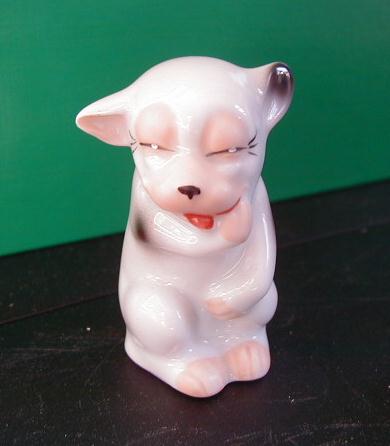
Some of the turn-of-the-century
molds that have been uncovered from these sites were
used by the German Doll Company to reproduce new
figures.
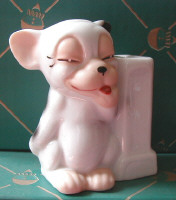
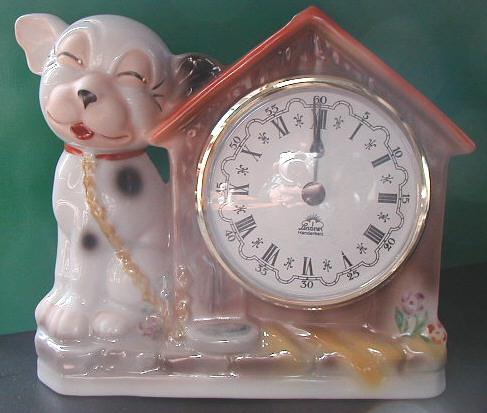
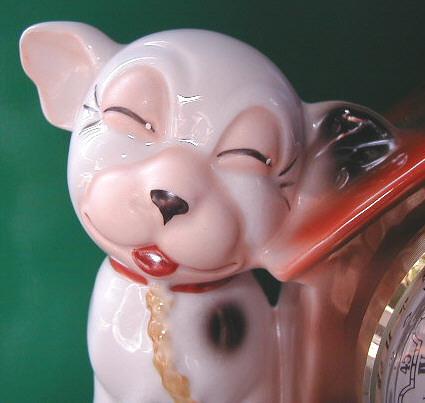
Note: There no
longer is a German Doll Co. website, & most
probably registered company. Also Roland
Schlegel (the German founder of the German Doll Co.)
has been, & continues to sell duplicate German
Doll Co. Bonzo figurines on eBay. They are not
marked German Doll Co. and are listed as old!
Buyer beware!
|